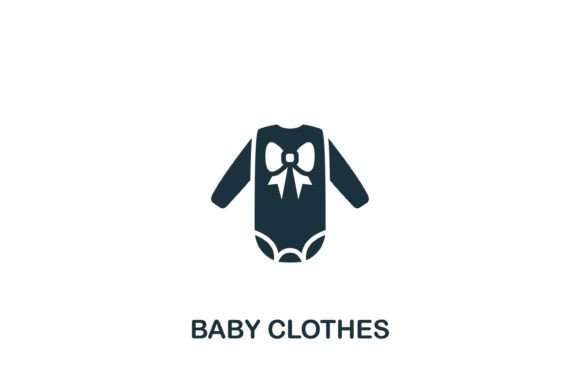
Baby Clothes Icon: A Practical Vector Asset for Design Projects
In the landscape of digital design and print media, finding specific, high-quality symbolic representations can often consume more time than the actual layout process. The Baby Clothes Icon serves as a focused solution for creators needing immediate, recognizable visual shorthand for infant-related content. This asset is not merely a decorative element; it is a functional component designed to streamline workflows for web designers, infographic creators, and marketers. By providing a simple line element baby symbol suitable for templates and professional presentations, this resource addresses the common friction point of sourcing consistent, editable vector graphics that maintain integrity across various media formats.
Technical Specifications and File Format Utility
The primary value proposition of this Baby Clothes Icon lies in its comprehensive file delivery system. Professional design work rarely exists in a vacuum or a single format, and the inclusion of EPS, JPG, AI, SVG, and editable source files ensures compatibility across the entire creative software ecosystem. Understanding the specific utility of each included format is essential for maximizing the asset's return on investment.
Scalable Vector Graphics (SVG): For web designers and UI/UX professionals, the SVG file is arguably the most critical component. Unlike raster images, SVGs are code-based, allowing for infinite scaling without pixelation. This makes the Baby Clothes Icon ideal for responsive websites where the symbol must look crisp on both mobile screens and large desktop monitors. Furthermore, SVGs can be styled directly with CSS, enabling developers to change stroke colors or fill opacity dynamically based on user interaction or dark mode settings without requiring additional image assets.
Adobe Illustrator (AI) and Encapsulated PostScript (EPS): These formats cater to print designers and branding specialists who require deep editability. The AI file preserves layers, anchor points, and path data, allowing users to modify the line weight, adjust curves, or integrate the icon into a larger composite illustration. The EPS format provides a universal standard for legacy systems and cross-platform collaboration, ensuring that clients or printers using different software versions can still access and utilize the vector data reliably.
JPG Raster Fallback: While vector formats are superior for production, the included JPG serves a vital role in rapid prototyping, internal mood boards, and non-designer communication. Stakeholders reviewing concepts may not have vector viewing capabilities, making a high-resolution raster preview necessary for approval workflows before final production begins.
Design Aesthetics and Visual Versatility
The aesthetic approach of this Baby Clothes Icon prioritizes clarity over complexity. Utilizing a simple line element style, the symbol avoids heavy fills, gradients, or excessive detail that can muddy reproduction at small sizes. This minimalism is a deliberate functional choice rather than just a stylistic trend. In interface design, icons often occupy spaces as small as 16x16 pixels; intricate details disappear at this scale, whereas clean line work remains legible.
This simplicity also enhances versatility across different brand identities. A highly stylized or colored icon might clash with an existing corporate palette or design language. However, a neutral line-art baby symbol acts as a chameleon. It integrates seamlessly into pastel-themed nursery e-commerce sites, stark medical infographics regarding pediatric health, or minimalist parenting blogs. The lack of inherent color bias allows the designer to apply brand-specific hues without fighting against pre-existing artistic choices within the icon itself.
From a cognitive load perspective, the recognizable silhouette of baby clothing communicates its meaning instantly. Users do not need to decode abstract shapes; the association between the garment outline and infant care is immediate. This efficiency is crucial in navigation menus, category filters, and instructional diagrams where speed of comprehension directly impacts user experience and engagement metrics.
Evaluation of Editability and Workflow Integration
An icon is only as valuable as its ease of modification. Assets that are flattened, expanded excessively, or constructed with messy geometry create technical debt. Based on the provided file structure, this Baby Clothes Icon appears constructed with workflow efficiency in mind. True editability means that anchor points are logical and paths are closed properly. When a designer needs to thicken a line for a billboard or thin it for a business card, the underlying geometry should support these adjustments without breaking.
For template creators, this level of flexibility is non-negotiable. If you are building a Canva template, a PowerPoint master slide, or a WordPress theme, the icon must adapt to various container sizes and color schemes effortlessly. The vector nature of this asset supports this adaptability, reducing the need to search for alternative versions when project parameters shift. This consolidation of assets saves significant administrative time during long-term projects.
Strategic Applications Across Industries
The practical application of the Baby Clothes Icon extends far beyond generic decoration. Different sectors leverage this type of visual asset to solve specific communication challenges.
- E-Commerce and Retail: Online stores utilize these icons for category navigation, size guides, and filtering systems. A clear clothing icon helps users distinguish between apparel, gear, and consumables like diapers or formula, reducing bounce rates caused by navigation confusion.
- Healthcare and Education: Pediatric clinics, daycares, and educational publishers use these symbols in signage, patient intake forms, and learning materials. The friendly, non-clinical appearance of a clothing icon can help soften institutional environments, making them feel more welcoming to parents and children.
- Content Marketing and Blogging: Writers and publishers use featured images and inline graphics to break up text-heavy articles about parenting, product reviews, or child development. A consistent icon set creates visual rhythm and reinforces topical relevance for SEO and reader retention.
- App Development: Mobile applications for tracking baby milestones, feeding schedules, or inventory management rely heavily on iconography. The lightweight nature of the SVG version contributes to faster app load times and smoother performance compared to heavier raster alternatives.
Considerations for Professional Implementation
While the Baby Clothes Icon offers significant advantages, professionals should approach implementation with standard best practices to ensure optimal results. First, always verify licensing terms before commercial deployment. Even if files are easily editable, usage rights dictate whether the asset can be used in client work, merchandise, or redistributed as part of a template. Clarifying this upfront prevents legal complications later.
Secondly, consider accessibility. When deploying the SVG or JPG version on the web, proper alt text and ARIA labels are mandatory. An icon that looks like baby clothes to a sighted user is invisible to screen readers unless tagged correctly. Semantic HTML implementation ensures that the visual shorthand translates effectively for all users, maintaining compliance with WCAG guidelines.
Finally, maintain visual consistency. If this Baby Clothes Icon is introduced into an existing project, evaluate its stroke width and corner radius against current assets. Mixing a 2px rounded-line icon with a set of 4px sharp-cornered icons creates visual dissonance. Fortunately, because this asset is fully editable in AI and EPS formats, adjusting these parameters to match your design system is a straightforward task, but it requires intentional effort.
Assessing Long-Term Value and Reliability
In evaluating whether to incorporate this Baby Clothes Icon into your asset library, consider the longevity of the design. Trends in iconography shift periodically—from skeuomorphic to flat, to material, to neo-brutalist. Simple line elements, however, possess a timeless quality that resists dating. This neutrality protects your investment, ensuring the graphic remains usable even as broader design trends evolve.
Reliability also stems from technical cleanliness. Vectors that are optimized and free of redundant nodes result in smaller file sizes and cleaner code output when exported for web use. This attention to technical hygiene reflects a professional-grade asset rather than a hastily traced amateur creation. For agencies and freelancers billing by the hour or managing tight deadlines, the difference between a clean vector and one requiring extensive cleanup can significantly impact project profitability.
Ultimately, this Baby Clothes Icon represents a pragmatic tool for visual communication. It bridges the gap between conceptual needs and technical execution, providing a flexible foundation for diverse creative tasks. Whether used for a quick blog post header or a comprehensive retail branding package, its combination of format variety, aesthetic neutrality, and editability makes it a reliable component for modern design workflows. Professionals seeking to enhance their infant-focused projects will find that this asset delivers tangible efficiency gains, allowing more time to be spent on strategy and creativity rather than asset fabrication.